Wednesday, February 19, 2014

For Class: Diablo 3: I thought we were done with this.


We were asked to do something simple: look for a video game, play and analyze it using critical theory. The way I understand critical theory, though completely watered down and maybe a little unreliable definition, is “seeing something that may actually be in violation of equal rights but disregarded as a social norm.”
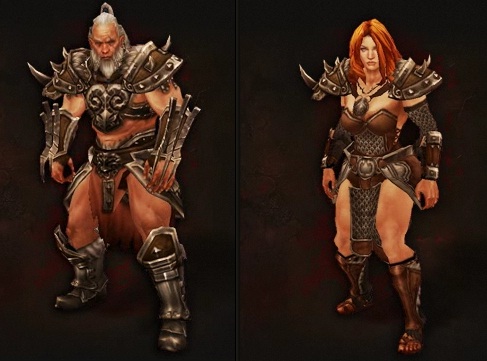
I haven’t played video games in a while. The most recent game that I played, however, can be as subject to critical theory as any other RPG that I’ve played in my 20 years of existence: Starting female characters. Why do they always have to be so naked/revealing. It started out as early as Tantra Online, which I played in gradeschool early 2003.

 I figured maybe it was just the setting of the game. ( I couldn’t find actual game play screen shots but trust me, it’s more or less the same.)
But years later, I played torchlight. 

And, recently,
Diablo 3.
Curiosity just gets to me how, in moments when girl characters are brought into play early on, they almost always have to show a lot of skin. Not that there’s anything particularly wrong with it, but I just feel that they shouldn’t have to. A simple “skin wrap” would do, but the results, more often than not result to cleavage and or crotch shots, or just legs. Exaggerated amounts of skin and "strategically cut clothes".
Moving on to critical theory, it’s pretty simple. It’s a social norm, by now, to find the clothes of female characters as such. But, as mentioned in Anita Sarkeesian’s controversial video, it shouldn't have to be that way. There’s more to “female gender” than the usual physical exaggerations. There's more than the usual markers.
The way society views women can be seen in the simple “social” parts of every day media whether it be in video games, movies, comics and even commercials. It’s more than "just an old norm”. Each time we say “it’s ok” for women to be portrayed as such, we’re giving society, and the next generation the thumbs up to agree that girls fall into that definition, that stereotype. This is actually discussed in Anita’s video (link below) where she talks about how video game producers have long since given up trying to find new ways to portray femininity. My point, isn’t that there’s anything particularly wrong with how the characters are dressed. It’s just that it’s become a norm that shouldn’t necessarily (or automatically) follow.
I do have to agree, however that the latter part of the game does go against the stereotype. Armor and gameplay later on doesn’t change much between male or female characters. 
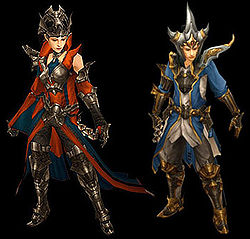
But still, if that's the case, is it too much to ask for game developers to start their characters with less "strategically cut clothes"? I'm just saying.

http://www.youtube.com/watch?v=eYqYLfm1rWA&list=PLn4ob_5_ttEaA_vc8F3fjzE62esf9yP61&feature=c4-overview-vl

Wednesday, February 5, 2014

Blogging/microblogging and Social Networking: Advocacies, freedom of expression and self.

Blogging  and Freedom of Expression in relation to the development and encouragement of both social and individual Advocacies, as well as community building.

With the rise of the instant information age, there have been numerous debates on whether this is more of a pro or a con. While the freedom of the internet has give rise to negativity like that of being insensitive or racist


It also comes with the freedom to go against it.


Blogging and microblogging, (which is defined by google as "the posting of very short entries or updates on a blog or social networking site, typically via a cellular phone") in today’s society has also become an avenue to develop, instill and encourage advocacies going against racism, sexism and, to an extent, any form of bullying or anything negative. Blogs and social networks become avenues for people not only to discover and deepen their knowledge on their own advocacies, but it also becomes an avenue for people to develop and put in to practice the things they learn. In building on their advocacies, the users and “posters/authors” of these posts become part of a community, giving these advocacies a louder and a stronger voice.

In a Tedx talk talking about using social media to stand up for women’s rights on the internet, Steph Guthrie talks about using and tapping into the advantage of the interconnectivity found in the internet’s online community. She Talks about her experience in drawing users online to a common cause, and how effective social connectivity works on-line. When Bendilin Spurr posted a game online asking users to beat up the controversial Anita Sarkeesian, Steph Guthrie decided to take action. Not long after finding the twitter account of the author of the said game, Steph Guthrie challenged and criticized his action, asking if this was something he’d do in real life.
“…the conversation caught fire and within an hour hundreds of users were participating in some capacity”. The incident became so big that, not soon after it begun, it started to spread outside of twitter. Blogs and and microbloggers were asking and posting and giving their opinions and stands on the case, “more than thousands were brought into the discussion”.
            This is a demonstration of the power of the online-user community and how its connectivity sparks conversation and debate, and, in turn, strengthens (or weakens) personal stands or advocacies.


Interconnectivity gives ideas backbone and support that would not have been possible in real life. It works through the support of websites ideas, posts, videos in user-based platforms like youtube, blogger, tumblr, twitter and other blogging/microblogging means makes use of the idea of creating an instant community where support and encouragement on advocacies, stands, ideas, hopes and the like are reinforced. Direct involvement in serious debates and discussions, though encouraged, isn’t even a requirement. Based on our discussion of “digital identity” where we have practically complete control over what we deem as “ourselves” and therefore what we deem as “appropriate/inappropriate”, it’s as simple as liking, reposting, viewing- any sort of interaction with the community or any of the information presented online. Everything contributes in some way, connecting other users to the information that is viewed as important.

Blogging and microblogging also makes it easier not only to spread the information for those who want to learn more or be involved in taking action, but for those who might be affected. Other than the bigger advocacies of gender equality or racism, positive reinforcement and often overlooked sub-advocacies like general encouragement which leads to the bigger advocacy of “pro-life”. The security and comfort found in the anonymity or “social distance” (as used by Steph Guthrie) not only allows advocacy supporters voice out their stands, but it also lets those affected, those who need to be approached and may need the help, share and talk about their experiences. Situations like these become opportunities for users to help, connect and interact. And this is, again, is where the internet helps advocacies. Interconnectivity, as mentioned earlier, helps with the possibility of larger user communities to act and interact and help in various ways. Blogging and microblogging lets users interact directly or indirectly. Indirect interaction means more of the presentation of “generalized” help, encouragement and the like.


 Direct interaction comes in the form of chat and user-replies which, again, becomes easier with the help of anonymity. Interaction like this not only encourages participation from advocacy supporters but it also brings more and more people in- if not through actual conversion of supporters, it draws attention to the information which, in turn, will or should eventually draw-in a user willing and waiting to participate. 


links:
http://www.youtube.com/watch?v=_KHEkR5yb9A
http://www.policymic.com/articles/79455/7-moments-that-made-frozen-the-most-progressive-disney-movie-ever
http://usfacingrace.wordpress.com/2011/04/29/avatar-the-last-airbender/

http://healthyliving-corrinalee.tumblr.com/post/75549262227/sounds-like-a-good-plan-to-me-anything-with-a
http://thestatusbro.tumblr.com/post/75422653055/inner-strength-lion
 http://www.youtube.com/watch?v=_KHEkR5yb9A