Thursday, January 23, 2014

Online identity?

My online identity:
Who I am online is more or less who I am in real life- or a more organized, established, less impulsive version of myself.
The thing about computers is that it works on data. Input. If there is no input, then there is no data created. My internet identity is a compilation of text, photos and videos. Being online, I am given the power to choose how I act and react, to choose what I approve to be “me”, and to choose to leave out the rest as “not me”.
Generally (in real life and online), I’m a stereotypical “nice guy”. For example, I don’t curse online. Rather, I try not to unless absolutely necessary- where the cultural context of the word is stronger than any other word I could have thought of using. This is due to my belief on text and permanence. Like I mentioned earlier, computers (and, consequently, the internet) work on input. Since any input is a choice- I try to be a lot more careful with what I say, understanding that anything I type out is a choice, permanent and “approved”. I often take time to gather my thoughts- most concepts meanings and ideas that I wish to convey are often debated to avoid miscommunication. Seeing it in front of me, begging the consideration of choice, makes me feel a little more liable/ guilty. Personally, while I do believe that cursing works to convey feeling (more on the curse words’ cultural context), I believe there are better things to say than to say something someone normally would out of impulse. I’m sure we've all had our share of things said that we wish we could take back. Anyway, I do curse, but, given the choice, I’d like to curse less. This shows on my social networking sites and even in my “anonymous/hidden” blogs. Even in chat, I am careful with what I say or what I talk about, in blogs I am careful with what I post or repost.

example of what I post and repost: (oneday--soon.tumblr.com)

this is an example of what I post. (things I post both in my social networks and show my friends etc. in real life as well. - originals. snapshots of "my life". hehe.)

(spontaneous-tendencies.tumblr.com)
I will explain what I mean by “hidden blogs”. I have multiple blogs where I let out my feelings, where I talk about the things I wish I could say but, for one reason or another, could not or cannot. Most of my posts talk about love interests- the “how I wish you knew”s. Most of these are things I wish I could say- but also things I could not say on the spot. A lot of these are also “me”, thinking out loud, making sense of my feelings, airing them out to the community, making the most out of the internet’s anonymity. This, however is still me. Often, these are more “organized”, more “artistic” or more “concentrated” expression of the things I talk about in person. 
example:

music:

All in all, however, this is also me. While I am not as impulsively or immediately “creative/articulate”, I do have a knack for communication, for writing- “artistic expression”. I put quotation marks on it for the mere reason that this falls under my definition of artistic. More emotionally driven and emotion-oriented ways/avenues of expression. An itch. I really do write and, in some rare occasions, I spout one-liners related to life or love or some tragedy or, as the common term is used: “hugot”.

I would be lying, I guess if I said that the exact person I am online is how I am when I’m around others. I’m me, though. The things I write or post online are things I would write or say in the confidence of myself or someone I’m really close to. The impulsive emotion-heavy topics are just as present online as they are offline. What makes the internet different, I guess, is that I find an instant avenue to “talk about/release” said impulsive emotion-heavy topics. As opposed to waiting for someone to talk to (which would often require “leading up to the topic of conversation. I don’t like just dropping off my baggage). But again. I often try to portray my offline self online- as I do try to portray my “more relaxed, more confident” online self, online. 


personal websites:
oneday--soon.tumblr.com
spontaneous-tendencies.tumblr.com
spontaneous--tendencies.tumblr.com
soundcloud.com/mictest

Wednesday, January 15, 2014

You Shall (should) Not Pass


Tumblr, as efficiently defined by wikipedia is a “microblogging platform and social networking website founded by David Karp and owned by Yahoo! Inc.” (source link below) The website allows users to post and or share content from their blogs as well as blogs that they follow. Most of the media found in tumblr are photos, videos, music, text-quotes and links to other websites.
In tumblr you will find photos from memes to photographs and paintings, from song lyrics to original poetry and self-quotes. Particularly interesting are the blogposts about love and heartbreak.
 A lot of what you might find on tumblr, for example look like this: 

 or like this:

 or this:
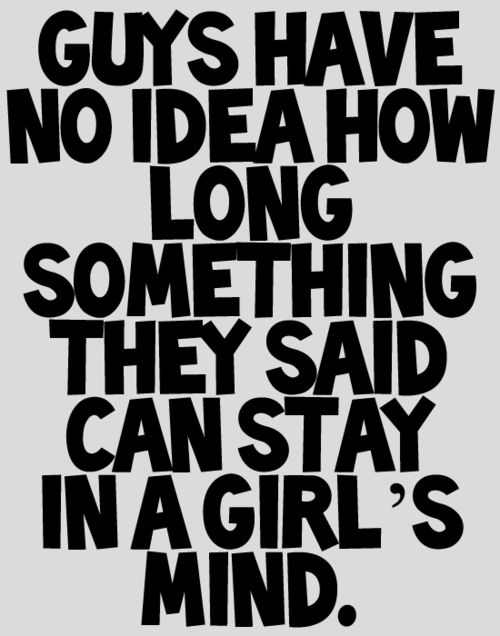
I don't see why there aren't enough posts on how long a girl could stay on a guy's mind, or how some girls tend to be visually biased as well or how guys feel when girls exchange them for someone else because it happens.
Most of the time this comes from the general notion that girls are more emotional than guys. When it comes to relationships and guys are more... well.

 When I think about the bigger picture of it all, it really isn't just one group's fault. It's ours. And by "ours" I mean everyone. The internet is supposed to be a place where we can form ourselves. free from the usual norms of the outside world. But for this to work, we shouldn't have to limit other parties either. These posts are stereotypes. What's wrong with stereotypes? 

Stereotypes, according to google's dictionary definition, are "simplified (or oversimplified) images or ideas of a person or thing". The general or logical problem with using stereotypes is that you, in a way, degrade the person or thing because you fail to acknowledge their complexity. More than that is when stereotypes begin to infiltrate- and influence- culture. There are various studies by sociologists and other experts explaining how stereotypes influence people's decisions. An example given in a book titled "Opportunities Lost: The Impact of Stereotypes on Self and Others", talks about how age-stereotypes end up discouraging older adults from contributing to society because some generalize that what they're saying is a product of "old age" (e.g. when they older adults talk about passionately giving back to society while you still can, or when grandparents try to give life advice). The idea that while some people treat stereotypes as a means for simply organizing their thoughts and concepts, other people see stereotypes as limits and therefore end up internalizing the limitations set by said stereotypes.

Who we are is affected quite largely by the culture we live in. The culture we live in is a product of what we support and what we allow. What does this say about the culture we are trying to create? We're coming up with the ideas like "it's 'Ok' for guys to objectify women which, in the process, creates the idea that guys are Superior." "Humans are superior". Therefore if you're objectified, you're less human and, in effect, inferior Which is obviously not the case. Human capacity to achieve is not reliant on gender. But supporting certain stereotypes limits and discourages people and society ends up missing out on what could have been great contributions. For example, the gender stereotype that girls shouldn't be gamers? There are various studies showing that 45% of online gamers are actually FEMALE (link below). Think of all of those great team runs online and imagine what it would be like if a key player were missing. 
The other is that it's okay for women to think that guys are emotionally lacking. It supports the limiting notion that guys are insensitive and less susceptible to the feelings they feel. When in reality, there are awkward guys who don't know how to approach women, there are guys who over think about girls just as much there are guys who get hurt and are as emotional- maybe just a little more reserved. But if you think about it, if the norms aren't what they are now, would it be that surprising to see guys talking about emotions? 

The stereotypes that are created are there for lack of knowledge on specific instances or terms. They aren't the norms that should be supported, they're things that need to be clarified. 


Sources: