Tumblr, as efficiently defined by wikipedia is a “microblogging platform and
social networking website founded by David Karp and owned by Yahoo! Inc.”
(source link below) The website allows users to post and or share content from
their blogs as well as blogs that they follow. Most of the media found in
tumblr are photos, videos, music, text-quotes and links to other websites.
In tumblr you will find photos from memes to photographs and
paintings, from song lyrics to original poetry and self-quotes. Particularly
interesting are the blogposts about love and heartbreak.
A lot of what you
might find on tumblr, for example look like this:

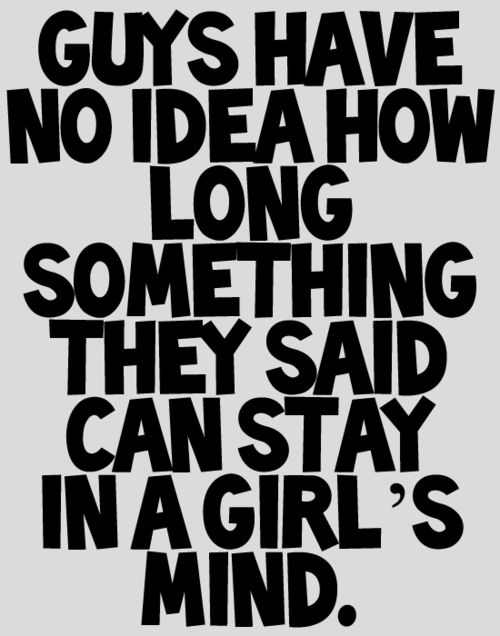

I don't see why there aren't enough posts on how long a girl could stay on a guy's mind, or how some girls tend to be visually biased as well or how guys feel when girls exchange them for someone else because it happens.
Most of the time this comes from the general notion that girls are more emotional than guys. When it comes to relationships and guys are more... well.


When I think about the bigger picture of it all, it really isn't just one group's fault. It's ours. And by "ours" I mean everyone. The internet is supposed to be a place where we can form ourselves. free from the usual norms of the outside world. But for this to work, we shouldn't have to limit other parties either. These posts are stereotypes. What's wrong with stereotypes?
Stereotypes, according to google's dictionary definition, are "simplified
(or oversimplified) images or ideas of a person or thing". The general or
logical problem with using stereotypes is that you, in a way, degrade the
person or thing because you fail to acknowledge their complexity. More than
that is when stereotypes begin to infiltrate- and influence- culture. There are
various studies by sociologists and other experts explaining how stereotypes
influence people's decisions. An example given in a book titled
"Opportunities Lost: The Impact of Stereotypes on Self and Others",
talks about how age-stereotypes end up discouraging older adults from
contributing to society because some generalize that what they're saying is a
product of "old age" (e.g. when they older adults talk about
passionately giving back to society while you still can, or when grandparents
try to give life advice). The idea that while some people treat stereotypes as
a means for simply organizing their thoughts and concepts, other people see
stereotypes as limits and therefore end up internalizing the limitations set by
said stereotypes.
Who we are is affected quite largely by the culture we live in. The culture we live in is a product of what we support and what we allow. What does this say about the culture we are trying to create? We're coming up with the ideas like "it's 'Ok' for guys to objectify women which, in the process, creates the idea that guys are Superior." "Humans are superior". Therefore if you're objectified, you're less human and, in effect, inferior Which is obviously not the case. Human capacity to achieve is not reliant on gender. But supporting certain stereotypes limits and discourages people and society ends up missing out on what could have been great contributions. For example, the gender stereotype that girls shouldn't be gamers? There are various studies showing that 45% of online gamers are actually FEMALE (link below). Think of all of those great team runs online and imagine what it would be like if a key player were missing.
The other is that it's okay for women to think that guys are emotionally lacking. It supports the limiting notion that guys are insensitive and less susceptible to the feelings they feel. When in reality, there are awkward guys who don't know how to approach women, there are guys who over think about girls just as much there are guys who get hurt and are as emotional- maybe just a little more reserved. But if you think about it, if the norms aren't what they are now, would it be that surprising to see guys talking about emotions?
The stereotypes that are created are there for lack of knowledge on specific instances or terms. They aren't the norms that should be supported, they're things that need to be clarified.
Sources:

No comments:
Post a Comment